Veranda, Canopy or Glass Room? A UK Buyer's Guide to Choosing the Right Garden Structure
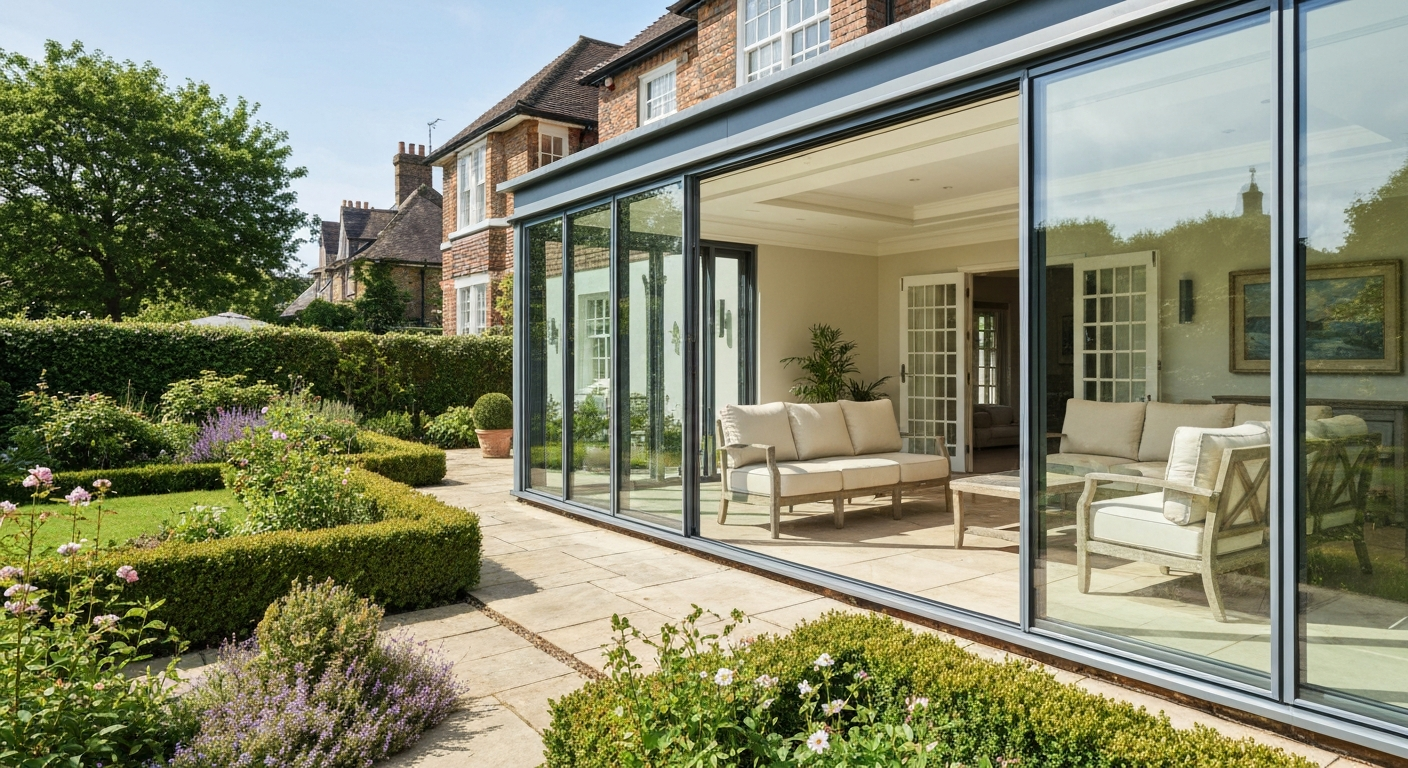
A covered garden structure can genuinely transform how you use your outdoor space — turning a patch of patio you abandon in September into somewhere you're having coffee in February, or giving a plainly functional garden a focal point that makes the whole property feel more considered. Getting it right is worth the research.
If you've started looking into covered garden structures, you've probably already noticed the problem: everyone uses different words for what might be the same thing — or completely different things. A 'veranda' on one website is a 'canopy system' on another. What one company calls a 'glass room' another calls a 'garden canopy'. And most of the content out there is written by people who are trying to sell you one specific product — usually the one they happen to make.
This guide is different. Canopy Installers UK works with installers across the country, which means we've seen the full range of structures up close. Our goal here is simple: help you understand what's actually available, what each option genuinely costs, and how to figure out which one is right for your garden, your budget, and your property.
By the end, you'll be able to walk into any conversation with an installer knowing exactly what you want — and what questions to ask.
The Main Structure Types Explained
Before you can choose, you need to know what you're choosing between. Here's a plain-English breakdown of the six main types of covered garden structure available in the UK.
1. Patio Canopy
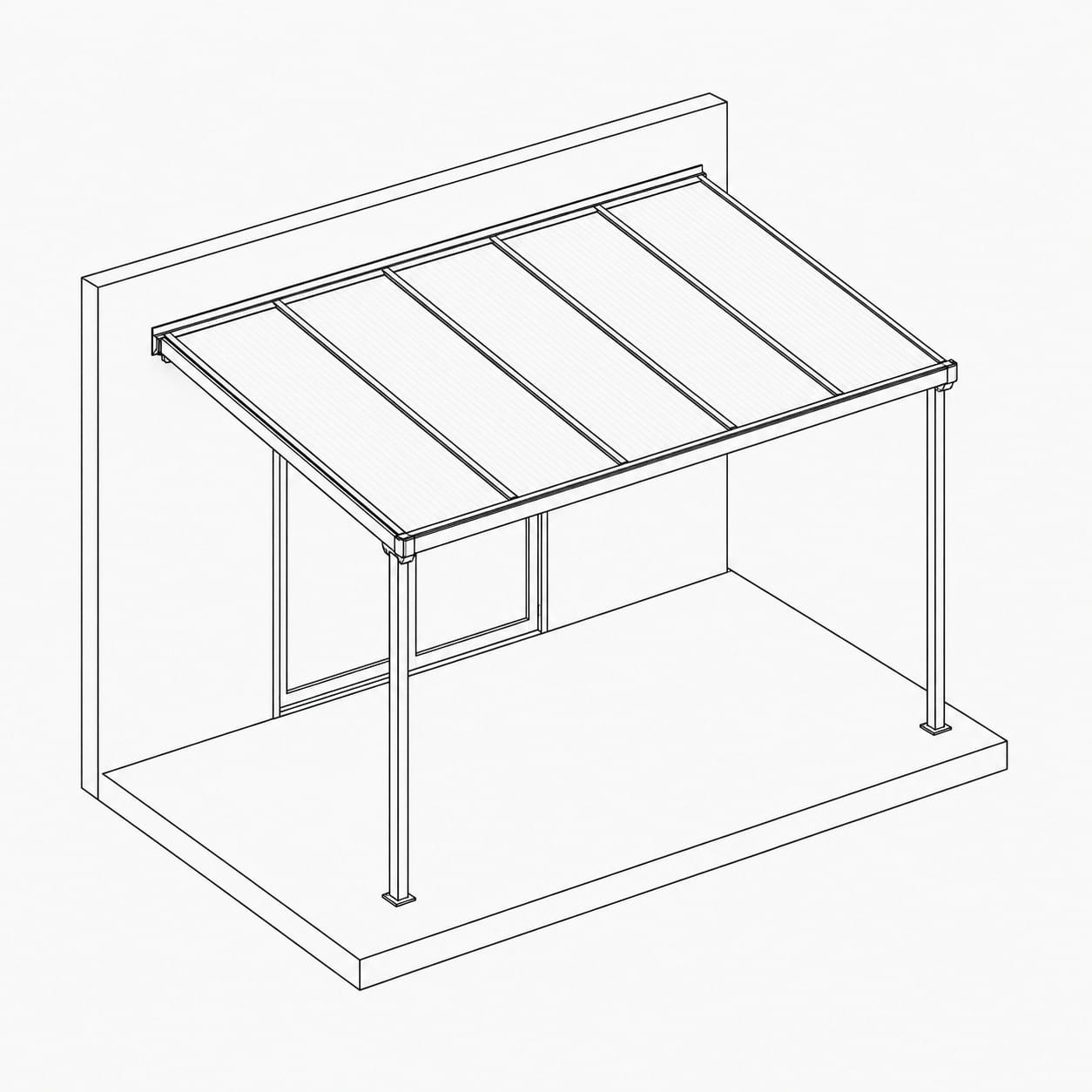
A patio canopy is the entry-level option — an aluminium or timber-framed structure with a polycarbonate roof that extends over your patio or back door. Most are lean-to designs attached to the house wall at the back, supported by posts at the front, though freestanding versions exist.
They're not as heavy-duty as a veranda — the profiles tend to be slimmer, the spans shorter, and there's typically no glazing option. But they're practical, affordable, and can be installed quickly, often in a single day. Visually, a patio canopy keeps things simple: clean lines over the back door, a defined edge to the outdoor space. If your main goal is keeping the rain off a compact patio without making a big architectural statement, a canopy does the job well.
Typical installed cost: From £1,500, depending on size, material, and specification.
2. Veranda
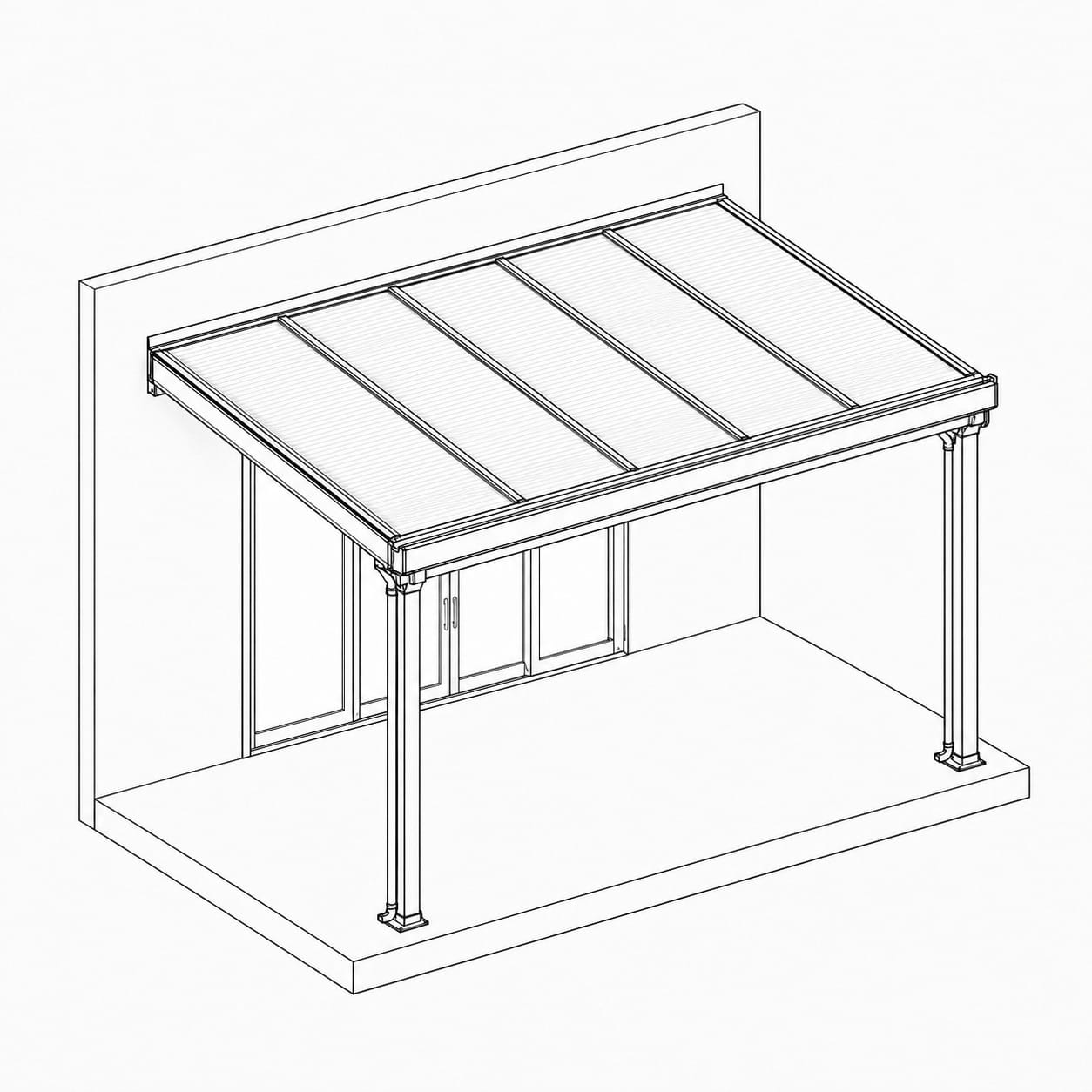
A veranda is a step up in both scale and build quality. The frames are heavier-duty, the posts wider, and the spans can be significantly longer — giving you a more uninterrupted view and a more substantial outdoor space. Most verandas attach to the house wall and project outwards, though freestanding configurations are available.
Verandas are available in aluminium, timber (softwood and hardwood), and occasionally uPVC. Roof options range from polycarbonate at the entry level through to glass on mid-range and premium versions. A well-made veranda changes the character of a garden in a way a canopy can't quite manage — it creates a room outside rather than just a covered area. On the right property, it's often the first thing visitors notice.
Typical installed cost: From £3,000, depending on size, frame material, roof material, and any extras such as lighting, heating, or side panels.
3. Glass Veranda
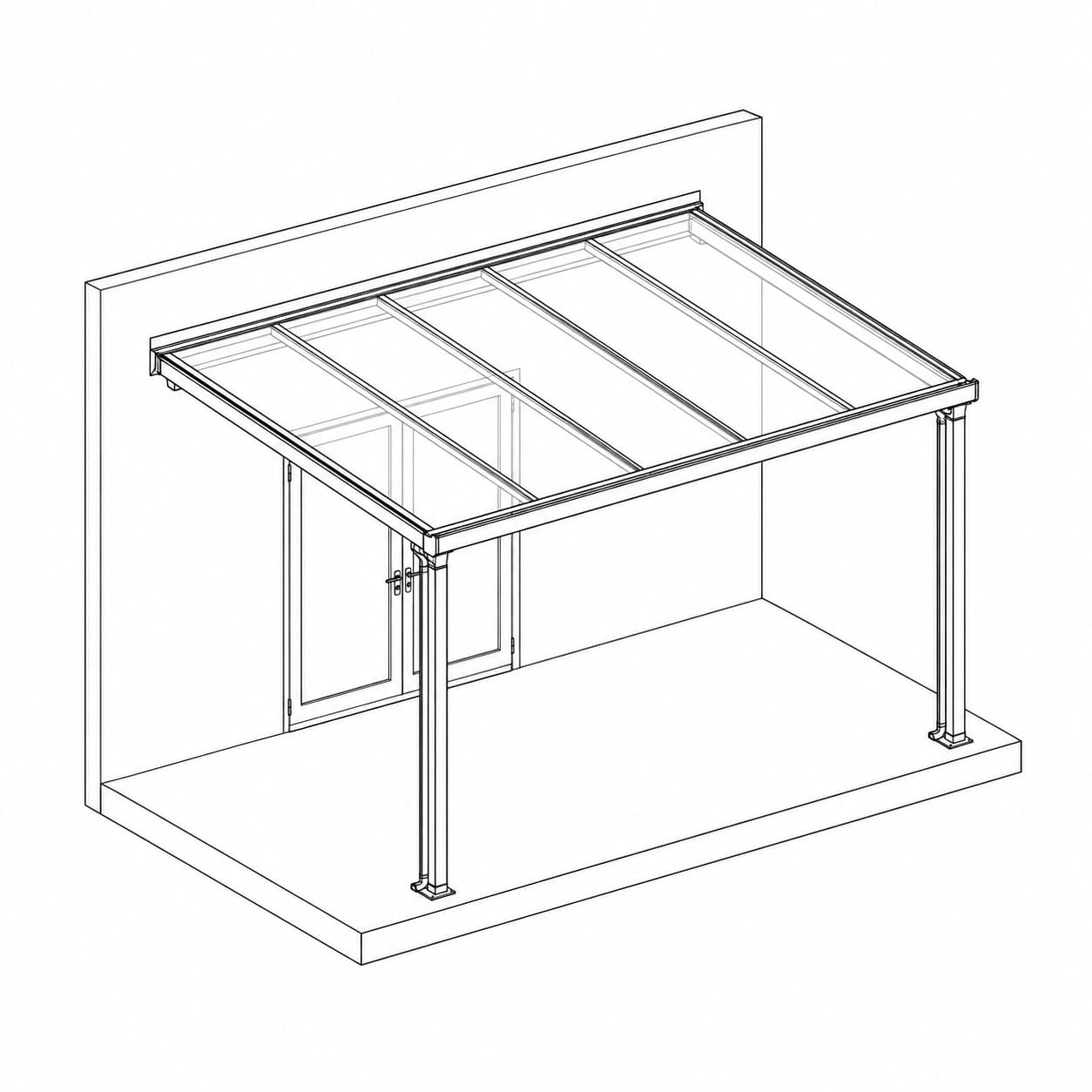
The glass veranda is essentially a premium veranda with a fully glazed roof — toughened or laminated glass rather than polycarbonate. The difference in experience is significant: glass is quieter in rain, doesn't yellow over time, allows a clearer view of the sky, and gives the structure a more architectural finish.
Glass verandas are well-suited to homeowners who want year-round use and are looking for something that genuinely adds to the appearance of the property. The aesthetic difference over polycarbonate is harder to convey in words than in photographs — glass has a clarity and weight that makes the structure look intentional and architectural rather than added-on. Most are aluminium-framed, though bespoke timber versions exist at the premium end.
Typical installed cost: From £4,500. A standard open-sided glass veranda starts around £4,500; enclosed or premium designs with side panels and sliding doors can comfortably exceed £15,000.
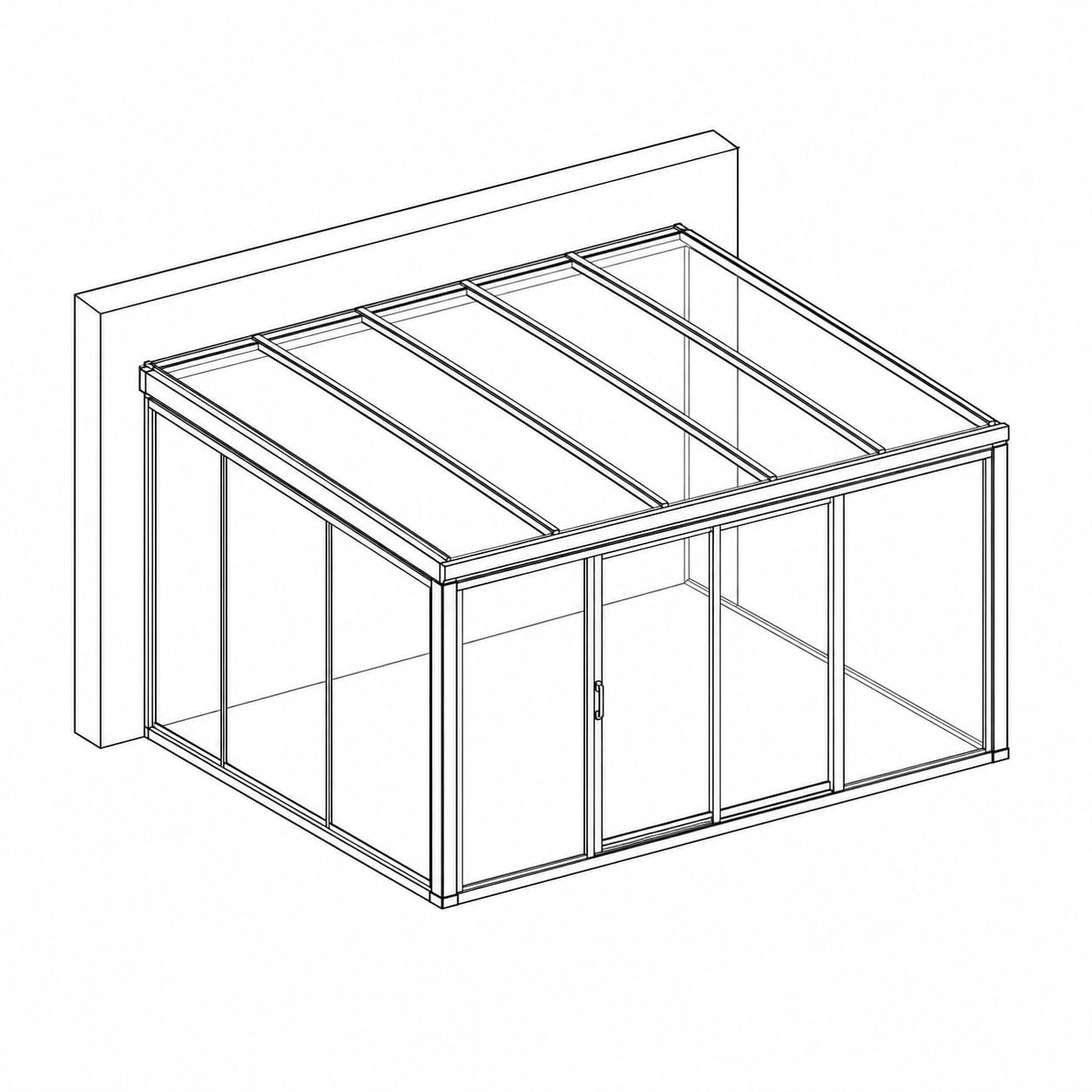
4. Glass Room / Canopy System
A glass room takes the veranda concept one step further by enclosing the sides — typically with sliding or fixed glass panels. The result is a space that feels more like an additional room than an outdoor structure: weatherproof from all directions, usable in all seasons, and suited to dining, entertaining, or relaxing regardless of what the British weather is doing.
This is the premium end of the covered structure market. The distinction from a conservatory is that glass rooms are typically open-framed structures built by specialist outdoor living installers rather than building contractors, and they don't usually require building regulations approval (though planning permission rules still apply — more on that below). Done well, a glass room blurs the boundary between house and garden in a way that genuinely changes how you live in both — it's not just outdoor space you've covered, it's a room you've added.
Typical installed cost: From £8,000, depending on size, glazing specification, and whether sliding door systems are included.
5. Pergola and Bioclimatic Pergola
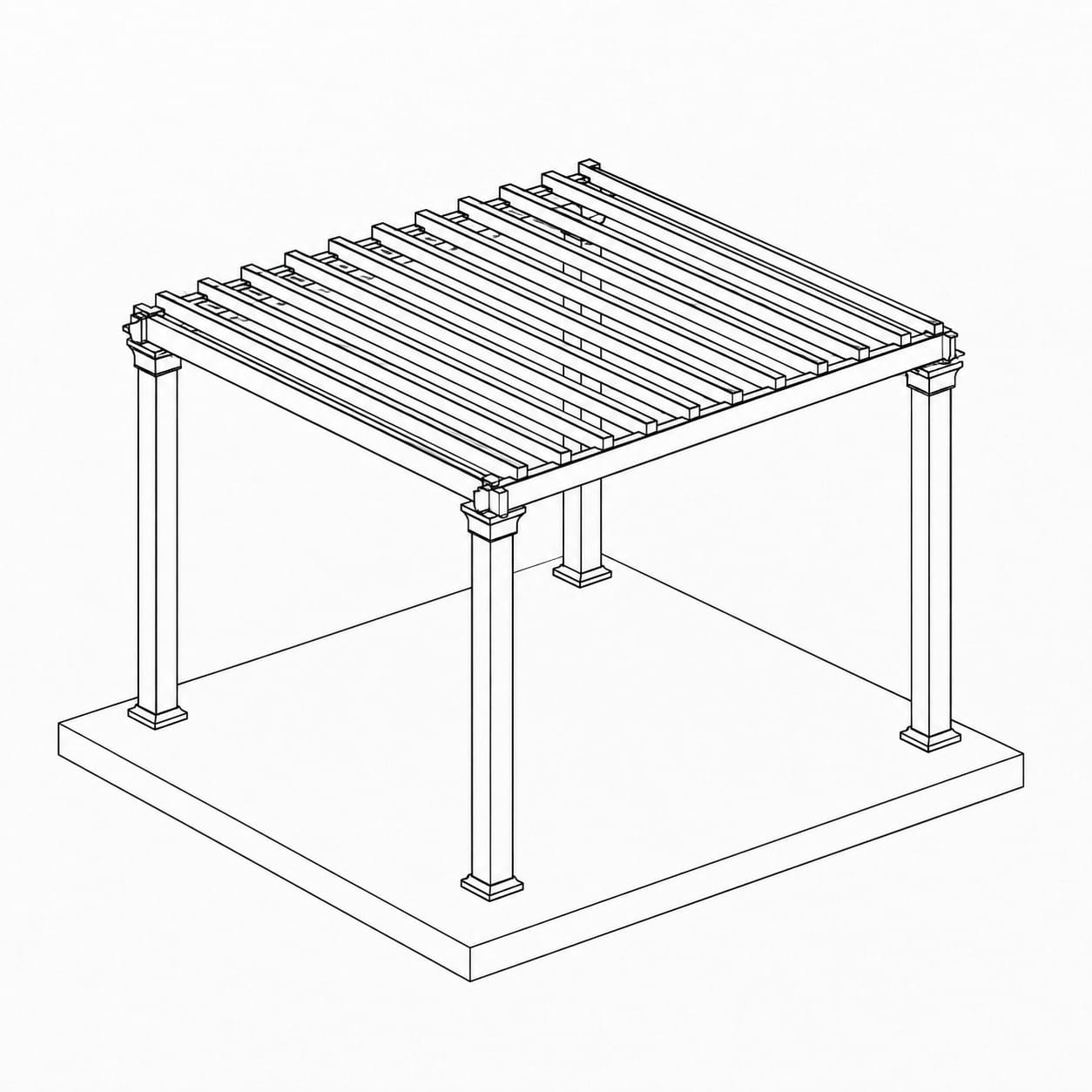
A traditional pergola is an open or semi-open structure — posts and beams with a slatted or louvred roof. It provides partial shade and an architectural focal point, but limited weather protection. Timber is the traditional material and remains popular for pergolas, particularly in cottage gardens and period properties; aluminium versions are common for contemporary settings.
The bioclimatic pergola is a different product altogether. These are precision-engineered aluminium structures with motorised rotating louvres that open and close at the touch of a button — or automatically in response to rain sensors. Close the louvres and you're fully protected from rain; open them and you have dappled shade and airflow. Most are available with integrated LED lighting, infrared heating, and side screens, making them genuinely all-season outdoor rooms.
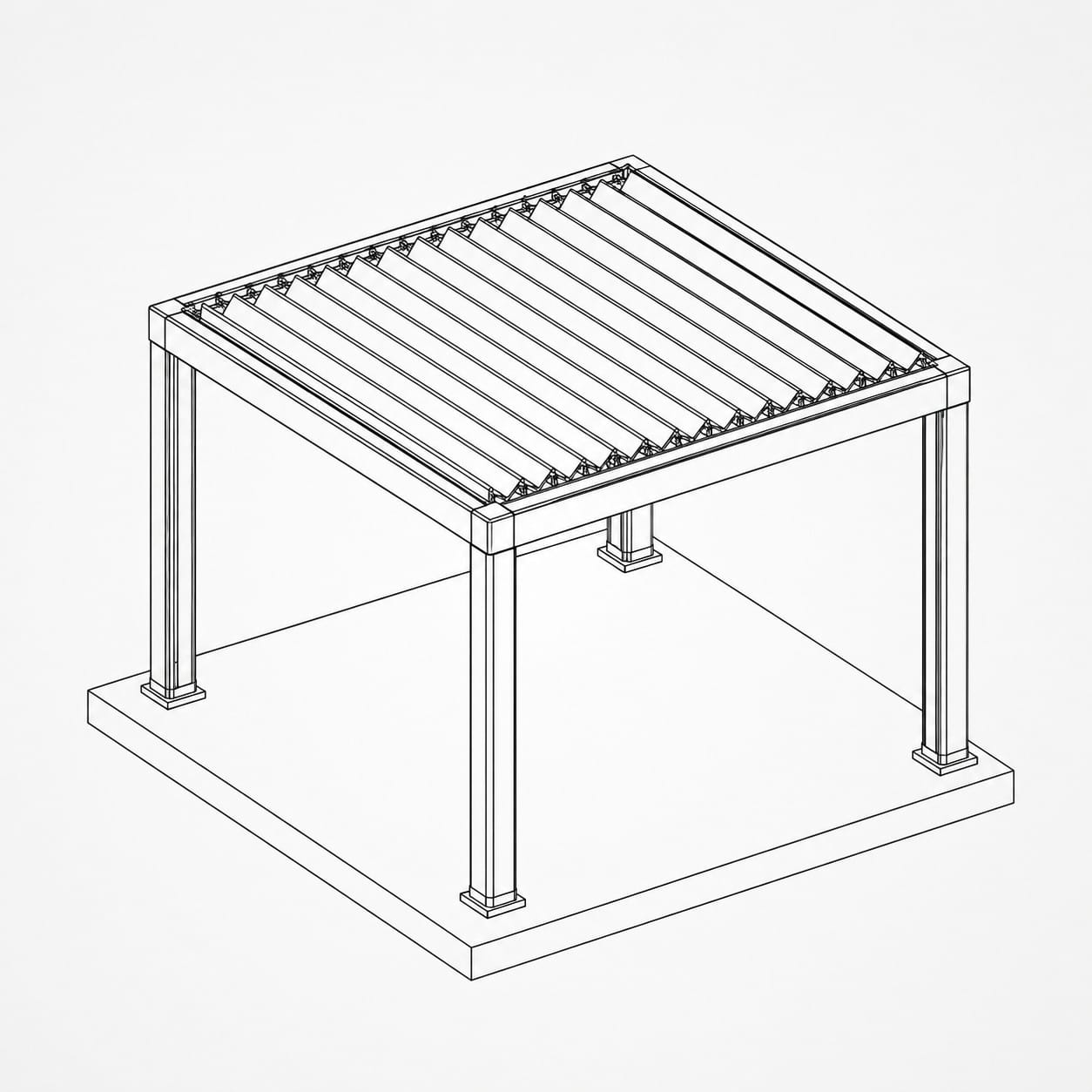
Typical installed cost: Standard timber or aluminium pergolas from around £3,900 installed. Bioclimatic pergolas with motorised louvres start from approximately £10,000 and typically range between £10,000 and £40,000 for larger or more specified systems.
6. Awning
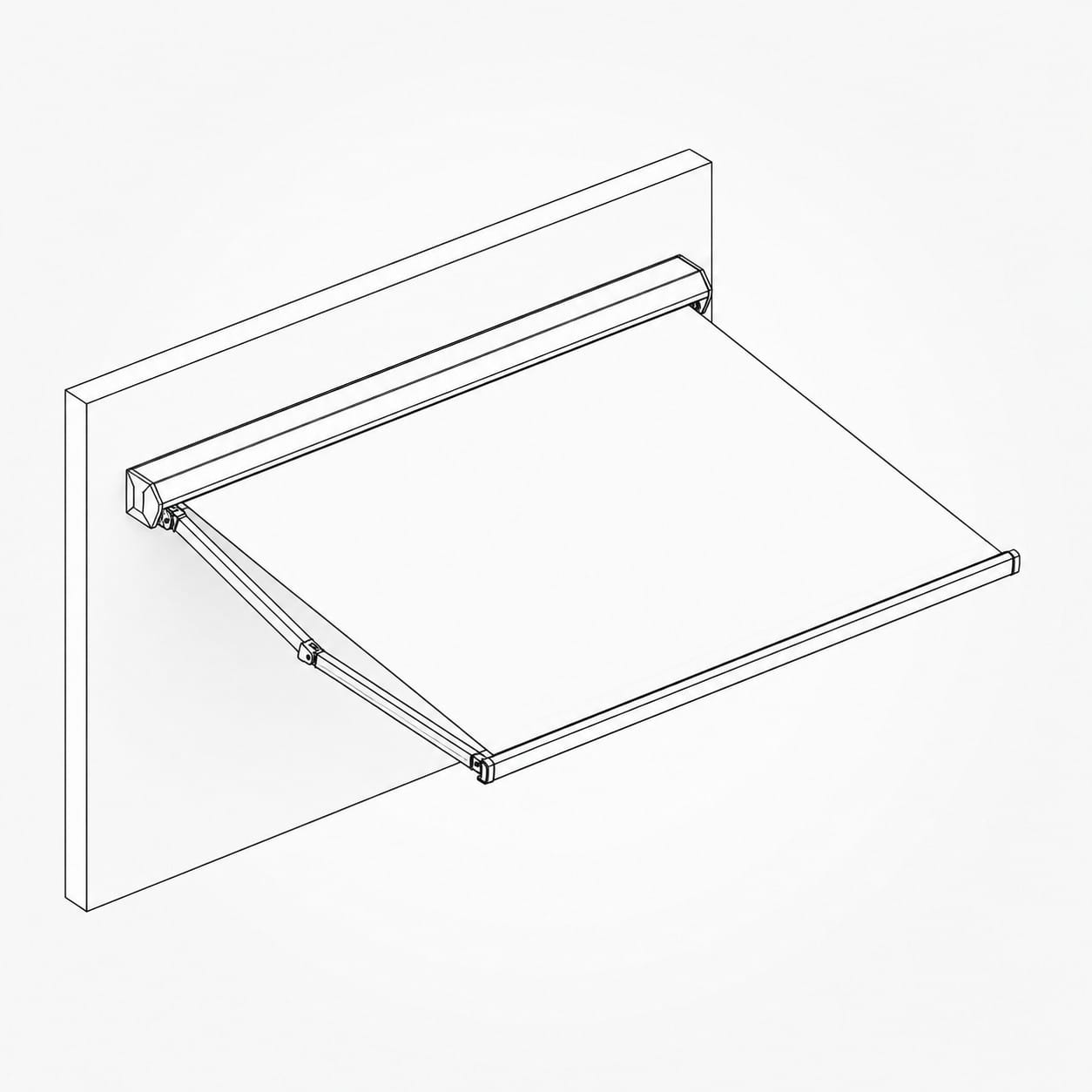
An awning is a retractable fabric canopy mounted to the wall of the house. It extends over a patio or decking area to provide shade and retracts when not needed. Awnings are the most affordable covered structure option and the most flexible — but they're fundamentally a fair-weather solution. In strong wind or heavy rain, they're retracted, which limits their usefulness across much of the UK year.
For homeowners whose primary need is sun shading rather than rain protection, and who prefer to keep their patio open for most of the year, an awning is a practical and cost-effective answer. Aesthetically, a quality motorised awning — particularly in a neutral canvas tone — can look very considered against the right property, and the fact that it disappears when retracted means it doesn't impose on the garden when not in use.
Typical installed cost: From £1,500 for a motorised patio awning professionally installed. Manual versions start from around £300 as DIY, though quality varies significantly at the lower end.
Frame Material: Aluminium, Timber, and uPVC
One of the most important choices you'll make is the frame material — and it's a decision that goes well beyond budget. Each material has genuine advantages and genuine trade-offs. Here's an honest look at all three.
Aluminium
Aluminium is the dominant material in the modern UK garden structure market, and for good reason. It won't rot, rust, or require repainting. The powder-coated finish is factory-applied to a high standard and holds its colour for decades. Aluminium profiles can carry wider spans with narrower posts, which matters if you want an unobstructed view beneath the structure or a large projection from the house wall.
On quality systems, life expectancy is typically quoted at 25 to 60 years depending on specification, and most reputable manufacturers back their frames with 10-year guarantees. Integrated drainage — where rainwater channels through the eaves beam and down through hollow posts — is a feature unique to aluminium systems and gives them a much cleaner finished appearance.
The trade-off is aesthetic. Aluminium reads contemporary and clean. That suits most modern, new-build, and barn conversion properties very well. Against a Victorian terrace, a cottage, or a period farmhouse, it can feel incongruous — though bespoke RAL colour options (including heritage greens, creams, and blacks) help considerably.
Timber
Timber remains a popular and entirely legitimate choice for garden structures — and it's worth being clear that it's not inherently a budget compromise. The picture varies significantly depending on which timber you're considering.
Softwood (pressure-treated pine, spruce): This is the most affordable timber option and the material used in most budget-end garden structures. It's serviceable and looks attractive when new, but it requires annual treatment with preservative or stain to maintain its appearance and prevent decay. Over a 10–15 year lifespan, the cumulative cost of maintenance — in both time and money — closes the gap with aluminium considerably.
Hardwood (oak, accoya, iroko, sweet chestnut): This is a genuinely premium option, and it commands a premium price. Oak-framed verandas and garden structures from specialist joiners are typically more expensive than mid-range aluminium, not cheaper. The appeal is purely aesthetic: hardwood grain and natural patina alongside a period property is something no powder-coated aluminium profile can replicate. Oak weathers to a silver-grey naturally, requires minimal treatment, and with proper construction can last well over 50 years. Accoya (acetylated softwood) offers similar durability with a more consistent appearance and a strong sustainability profile.
The key question when considering timber is maintenance appetite. If you're comfortable with periodic treatment and the idea of the structure evolving in appearance over time, timber — particularly hardwood — is a rewarding choice. If you want a structure you can ignore for 20 years, aluminium is more forgiving.
uPVC
uPVC structures exist at the budget end of the patio canopy market. uPVC frames are cheap to produce, don't require painting, and are widely available. The trade-offs are meaningful, though: uPVC profiles are less structurally capable than aluminium at equivalent sizes, meaning spans are shorter and the overall aesthetic tends to look lighter and less substantial. uPVC can also discolour, become brittle, or warp over time, particularly in sustained UV exposure.
Most specialist outdoor living installers don't offer uPVC structures, and it's not a material you'll typically encounter on mid-range or premium projects. If you're comparing quotes and one is based on a uPVC frame, make sure you're comparing like for like.
Which Is Right for You? A Decision Framework
Rather than a generic list of pros and cons, here's a practical framework based on the questions that actually matter. The goal isn't to steer you toward one type of structure — it's to help you picture what your garden could look like, and what you'd actually use.
How much weather protection do you actually need?
Start by picturing how you actually want to use the space. Is it a warm-weather extension of the kitchen — somewhere to eat outside from May to September? Or do you want somewhere to sit with a coffee in January, to let the children play in October rain, to entertain through the autumn? The answer to that question will do more to narrow your options than any specification comparison.
If warm-weather use only: an awning or a basic patio canopy may be all you need. If you want the space through autumn and winter, you need a structure with a proper roof. A polycarbonate veranda or canopy provides solid year-round overhead protection. A glass veranda or glass room does the same with higher aesthetics. A bioclimatic pergola gives you climate control on top — adjustable shade, rain protection, and integrated heating for the colder months.
What's your budget?
As a rough guide to where each structure type sits:
Under £3,000: Awnings and entry-level patio canopies. Practical but limited in scope and seasonality.
£3,000–£6,000: Mid-range patio canopies and entry-level polycarbonate verandas. Good quality and year-round overhead protection.
£6,000–£12,000: Glass verandas, quality aluminium or hardwood timber pergolas, and mid-range bioclimatic structures. The sweet spot for homeowners who want a proper outdoor room.
£12,000–£25,000+: Glass rooms, premium glass verandas, oak-framed verandas from specialist joiners, and high-specification bioclimatic pergolas with full automation. These are genuine lifestyle investments.
One thing worth knowing: most installers don't publish their prices online, not because they're hiding anything, but because every job is genuinely different in terms of size, access, ground conditions, and specification. Getting two or three quotes from reputable local installers is always worth doing.
Does your property suit the material?
This is a question the buying guides rarely ask, but it matters more than most people realise before they've seen the finished result.
A contemporary house with clean lines and large windows will typically look best with an aluminium-framed structure — the material is sympathetic to modern architecture and the range of powder-coat colours is wide enough to match almost any facade.
A Victorian terrace, a cottage, or a period farmhouse is often better served by timber — particularly hardwood oak, which brings a warmth and natural character that aluminium can't replicate. Some bespoke aluminium systems offer heritage colour options (sage green, heritage cream, black) that work well on older properties, but it's worth looking at examples on similar property types before committing.
How much space do you have, and does it need to be freestanding?
Most verandas, canopies, and glass rooms are wall-mounted — they attach to the house and project outwards. For most UK gardens, this is the right configuration: it keeps the connection between indoor and outdoor space natural and makes the most of the area immediately behind the house.
If you want a structure in the garden itself — away from the house — freestanding verandas, glass rooms, and pergolas are available, though they tend to come at a premium. They also have slightly different planning implications (see below).
Do you need planning permission?
This is a real buyer anxiety, and the honest answer is: it depends. Here's the practical picture for England (Scotland, Wales, and Northern Ireland have their own rules, though they're broadly similar).
Most verandas, canopies, and glass rooms fall under Permitted Development — which means you don't need to formally apply for planning permission, provided:
- The structure is single-storey
- The roof height doesn't exceed 4 metres (or 3 metres if within 2 metres of a boundary)
- It covers no more than 50% of the land around the original house
- It doesn't face a highway (i.e., it's not going in your front garden)
A good installer will confirm the planning position for your specific property before any work starts. If you're unsure ahead of getting quotes, your local planning authority can often give informal guidance.
Canopy Compare
An interactive decision-support tool helping homeowners choose the perfect garden structure by comparing features, materials, and suitability side-by-side.
What to Look For When Choosing
Once you've narrowed down the type and material of structure you want, here are the key things to check when evaluating specific products and installers.
Roof material
Polycarbonate is the standard and most affordable option. It's lightweight and provides good protection, but it can yellow or discolour over time and is noisier in rain than glass. Look for UV-stabilised multiwall polycarbonate (typically 16mm or 25mm) — thicker panels are quieter and better insulated.
Toughened or laminated glass costs significantly more but doesn't degrade, looks cleaner, and is considerably quieter in rain. If you're spending upwards of £7,000, glass is generally worth the step up.
Frame quality and finish
For aluminium structures, all quality systems use powder-coated frames, which won't rust, rot, or require repainting. The key differentiator is the profile gauge — heavier profiles are stronger, span further, and feel more substantial. Ask specifically about post width and eaves beam dimensions if you're comparing products at different price points.
For timber structures, ask about the species, treatment process, and any moisture content guarantees. For softwood, confirm it's pressure-treated rather than brush-applied. For hardwood, confirm the sourcing — sustainably certified timber (FSC or PEFC) is the standard for reputable suppliers.
Drainage
On quality aluminium structures, drainage is integrated into the frame — rainwater channels through the eaves beam and down through the posts, exiting through the post feet. This means no external PVC guttering, which looks cleaner and is less prone to blockage. On timber structures, conventional external guttering is typical and perfectly adequate, though the visual finish is different.
Warranty and structural ratings
Reputable aluminium systems come with 10-year warranties on the frame and fixings as standard; some premium systems offer longer. For timber, warranty terms vary considerably — a joiner-built bespoke structure may offer a workmanship guarantee rather than a product warranty; clarify what's covered and for how long. Ask whether the structure has been tested to UK snow and wind load standards, particularly for larger projections.
Questions to Ask Any Installer
A good installer will welcome these questions. If they can't answer them clearly, that tells you something useful.
- Is this structure covered under Permitted Development for my property specifically, or will I need to apply for planning permission?
- What snow and wind load ratings does the system meet, and can you provide documentation?
- For aluminium: how is rainwater managed — is drainage integrated or external?
- For timber: what species is the frame, how has it been treated, and what maintenance will it need?
- What warranty comes with the frame and the roofing, and who backs it — the manufacturer or your company?
- Can I see examples of completed installations similar to mine, either in person or in photographs?
Quick Comparison: All Structure Types
Use this table as a quick reference when comparing your options side by side. All price ranges are for aluminium-framed structures unless noted. Timber equivalents vary significantly by species — softwood may be lower; hardwood oak is often comparable to or higher than aluminium at the same size.
| Structure | Weather protection | Typical cost (installed) | Planning permission risk | Best use case | Expected lifespan |
|---|---|---|---|---|---|
| Patio canopy | Overhead only | From £1,500 | Low | Small patios, budget-conscious buyers | 15–20 years (aluminium) |
| Veranda | Overhead (year-round) | From £3,000 | Low–Medium | Year-round outdoor dining and relaxing | 20–25 yrs (alu) · 10–15 yrs (softwood) · 40+ yrs (hardwood) |
| Glass veranda | Overhead (year-round) | From £4,500 | Low–Medium | Premium outdoor room; adds kerb appeal | 25+ years |
| Glass room | All-round (year-round) | From £8,000 | Medium | Full outdoor room; entertaining space | 25+ years |
| Pergola / bioclimatic | Partial to full (bioclimatic) | From £3,900 | Low | Flexible shade; bioclimatic = all-season | 20–25 yrs (alu) · 15–50+ yrs (timber) |
| Awning | Overhead (fair weather) | From £1,500 | Very low | Sun shading in summer months | 10–15 years |
All prices are approximate starting points for a professionally installed structure. Actual cost varies by size, specification, and location.
Ready to Take the Next Step?
The best way to get an accurate picture of what's possible for your garden — and what it will cost — is to speak to an experienced local installer who can assess your space in person. A good site survey is free, no-obligation, and will give you far more useful information than any online guide can.
We're currently building a directory of vetted UK installers. Check back soon — or bookmark this page and we'll be adding new guides and installer listings regularly.
In the meantime, read more on what to look for when choosing an installer in the guide above.
This guide was written by the Canopy Installers UK editorial team. Price ranges are based on publicly available UK installer data, correct as of mid-2025.